
AggreSand 165 & 206 Modular Sand & Gravel Wash Plants
Integrated washing, screening and sand recovery for aggregate producers.
Integrated Washing, Screening & Sand Recovery.
Produce the washed aggregate and sand products your operation needs, from the material you have.
A successful wash plant does more than clean aggregate. It separates material into the required sizes, removes unwanted fines and contaminants, recovers usable sand and prepares products for stockpiling or further processing.
Terex Washing Systems AggreSand plants bring screening and sand recovery equipment together in a modular arrangement. Rather than assembling an entire washing circuit from unrelated components, producers can start with an integrated system configured around their feed material, production requirements and finished product specifications.
Whether you’re developing a new sand and gravel operation or considering an upgrade to an existing washing circuit, Foreman Equipment can help you evaluate the equipment and configuration required.
What Is an AggreSand Wash Plant?
AggreSand is a family of modular aggregate washing plants designed to combine washing, screening and sand classification in an integrated system.
The plant separates incoming material into coarse aggregate products and a sand-bearing fraction. Depending on the configuration, the sand circuit uses hydrocyclone classification and dewatering equipment to recover sand and manage unwanted fine particles.
AggreSand plants are available in 165 and 206 model families. The appropriate configuration depends on factors including feed gradation, target products, production requirements, available water, site layout and the amount of washing or scrubbing the material requires.
Modular doesn’t mean one-size-fits-all. The equipment must still be matched to the material and the job.
What Makes AggreSand Different?
AggreSand brings the principal washing and sand recovery operations together in a pre-engineered modular arrangement. They are pre-wired and pre-plumbed modules: Factory-prepared connections that simplify on-site installation.
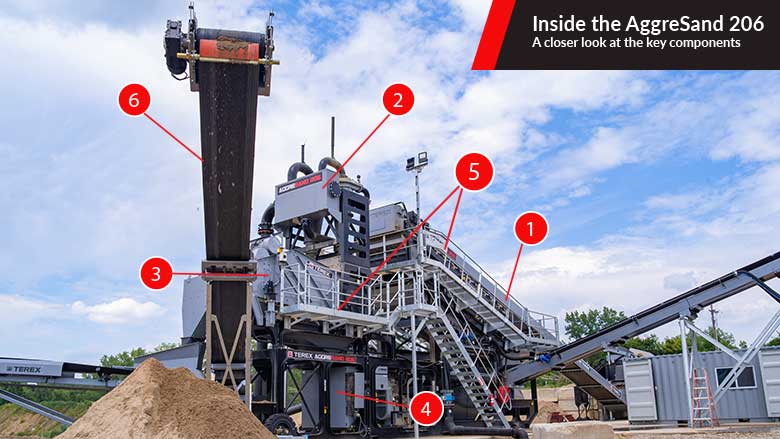
Both models feature:
- Integrated aggregate washing and sizing: Two- or three-deck washing screen configurations.
- Hydrocyclone sand classification: Single- or twin-grade sand recovery arrangements.
- High-frequency sand dewatering: Equipment selected for the required sand production capacity.
- Automated controls: Touchscreen operation, automated start/stop sequences and monitoring of key operating parameters.
- Maintenance access: Accessible screening media, lined wear components and roll-out slurry pumps.
- Washed Sand Discharge Conveyor: Transports finished washed sand to the stockpile.
Depending on the configuration, AggreSand can produce up to three washed aggregate products and two washed sand products.
| Specification | AggreSand 165 | AggreSand 206 |
|---|---|---|
| Aggregate Washing Screen | 4.9 × 1.5 m (16 × 5 ft) | 6.0 × 1.8 m (20 × 6 ft) |
| Screen Decks | 2 or 3 | 2 or 3 |
| Washed Aggregate Products | Up to 3 | Up to 3 |
| Washed Sand Products | Up to 2 | Up to 2 |
| Sand Dewatering Capacity | Up to 120 or 200 metric tonnes/hr, depending on configuration | Up to 200 metric tonnes/hr, depending on configuration |
| Washing Screen Drive | 15 kW (20 hp) | 22 kW (30 hp) |
| Hydrocyclones | Configuration-dependent | Configuration-dependent |
| Process Water Requirement | 250–500 m³/hr, depending on configuration | 250–500 m³/hr, depending on configuration |
Note: Sand dewatering capacities refer to the sand circuit, not total plant throughput. Process water figures are not fresh-water makeup requirements. Actual specifications depend on configuration.
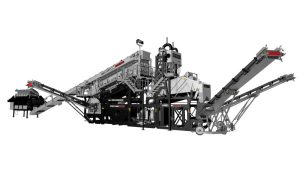
AggreSand 165
The AggreSand 165 uses a 16 × 5 ft washing screen and is available with two- or three-deck screening arrangements.
It can be configured to produce one or two washed sand products alongside the required coarse aggregate fractions.
The 165 offers sand dewatering arrangements rated up to 120 or 200 metric tonnes per hour, depending on the selected equipment.

AggreSand 206
The AggreSand 206 uses a larger 20 × 6 ft washing screen, providing additional screening area for applications requiring a larger washing deck.
Like the 165, it offers two- or three-deck arrangements and single- or dual-grade sand recovery options.
The larger screen does not, by itself, determine the plant’s production capacity. Feed characteristics, screening efficiency, sand content and downstream equipment must all be considered.
How an Aggresand Plant Works
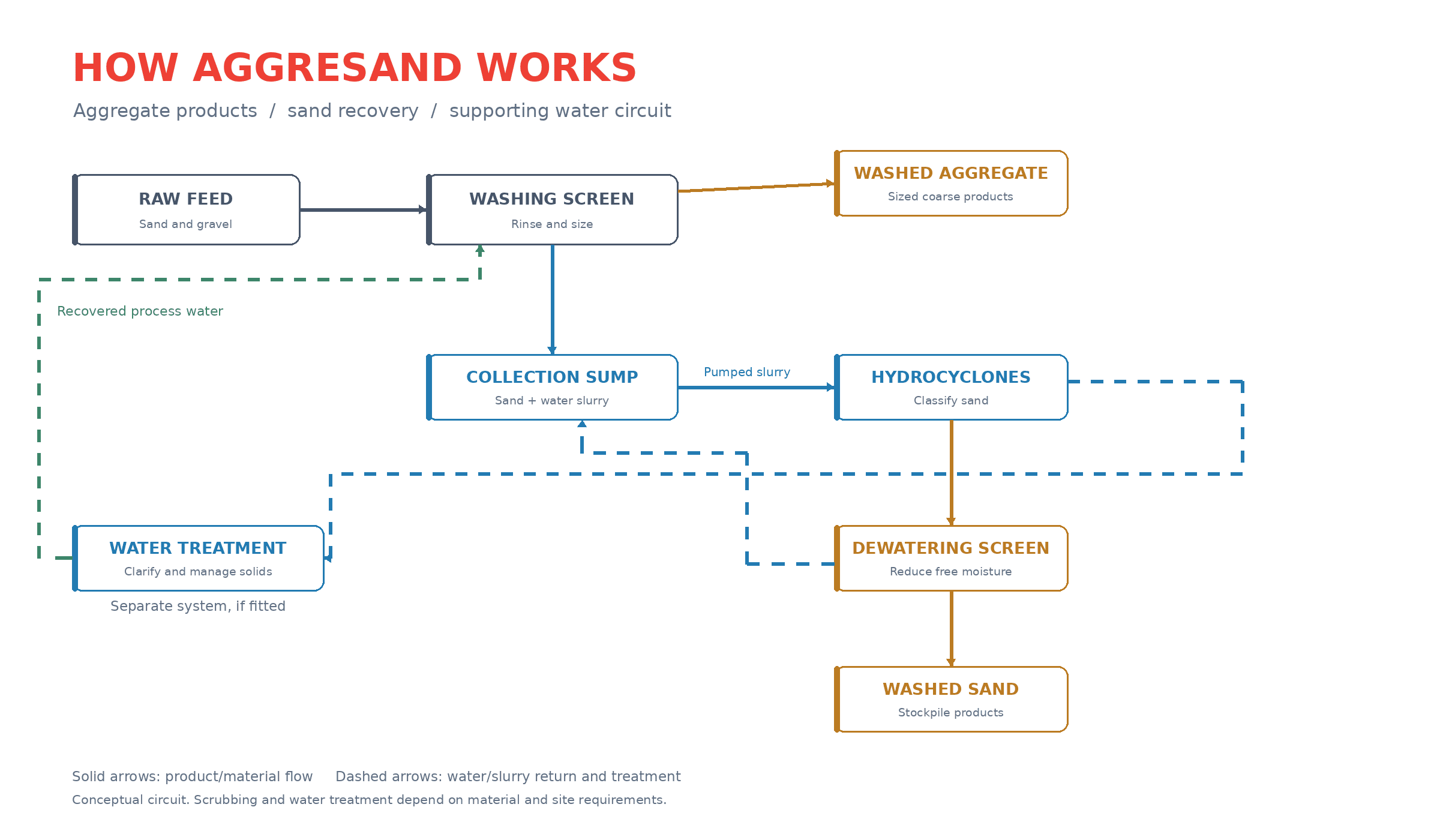
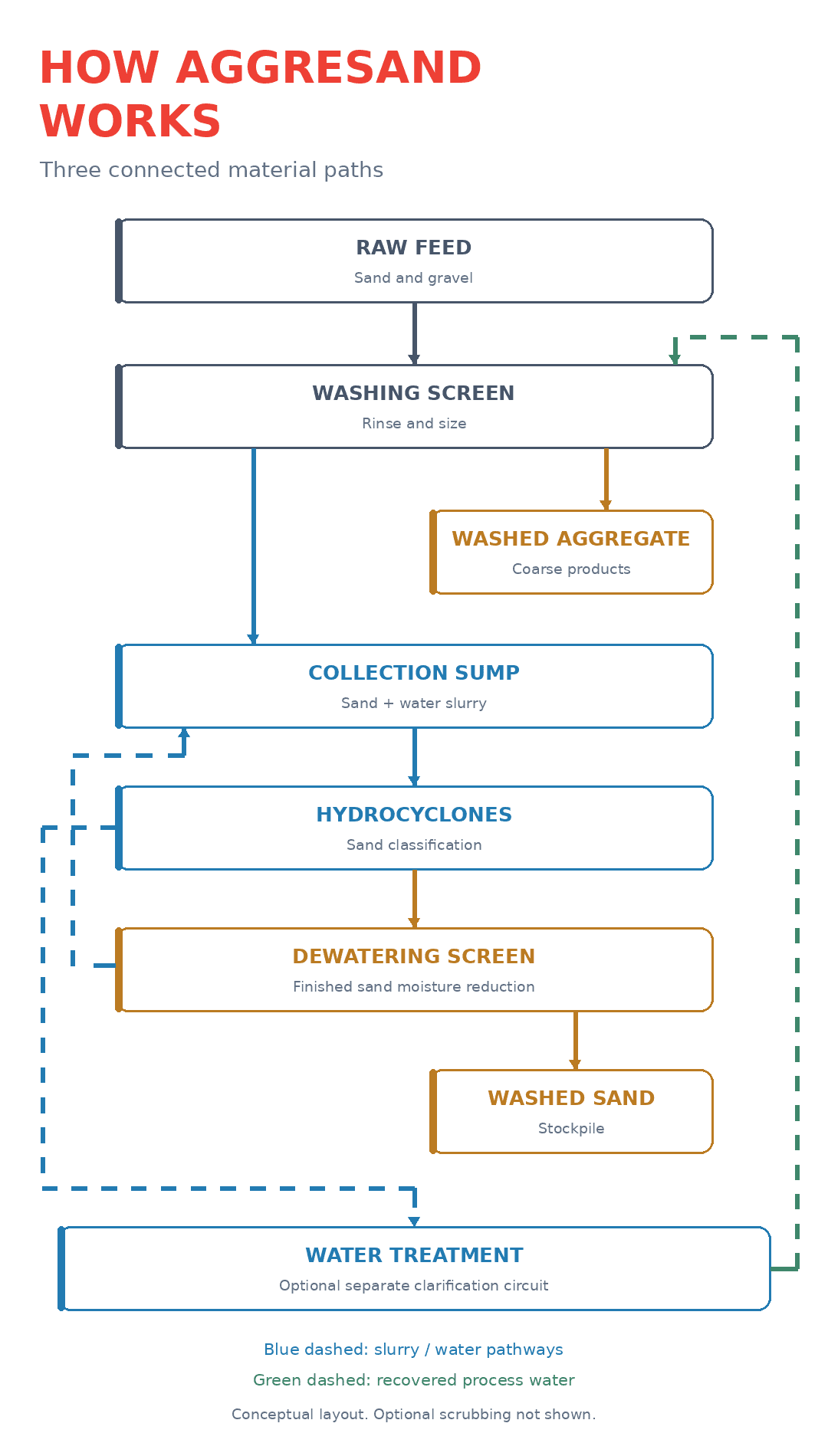
An AggreSand wash plant combines aggregate washing and sizing with sand classification and dewatering in one modular system. Rather than treating every material through the same process, the plant separates coarse aggregate from sand-bearing slurry, allowing each product stream to be processed independently.
Aggregate Washing and Sizing
Raw sand and gravel enters the washing screen, where spray bars rinse the material while the screen separates it into the required aggregate sizes.
Oversize and correctly sized aggregate discharge onto their respective conveyors for stockpiling. Sand, fine particles and wash water pass through the screen into the sand recovery circuit.
The number and sizes of finished aggregate products depend on the screen configuration and selected screening media.
Related: Sand Washing and Classifying
Sand Classification and Dewatering
Sand-bearing slurry is collected in a sump and pumped to hydrocyclones. The cyclones separate recoverable sand from much of the water and finer material.
The recovered sand passes onto a high-frequency dewatering screen, where excess water drains away before the sand is discharged to a stockpile conveyor.
Depending on the configuration, AggreSand can produce up to two washed sand products. Water draining through the dewatering screen returns to the sump for further processing
Water Management and Recycling
Washing requires a continuous supply of process water, but that doesn’t mean the plant must consume an equivalent volume of fresh water.
Water and fine suspended solids leaving the hydrocyclones can be directed to a separate water treatment system. Depending on the installation, this may include clarification, sludge handling and mechanical dewatering.
Recovered water can then be returned to the washing circuit, reducing the amount of replacement water required.
Related: Water Management and Recycling
Important: Water clarification and sludge dewatering equipment are not automatically included with every AggreSand installation. They must be considered as part of the overall wash plant design.
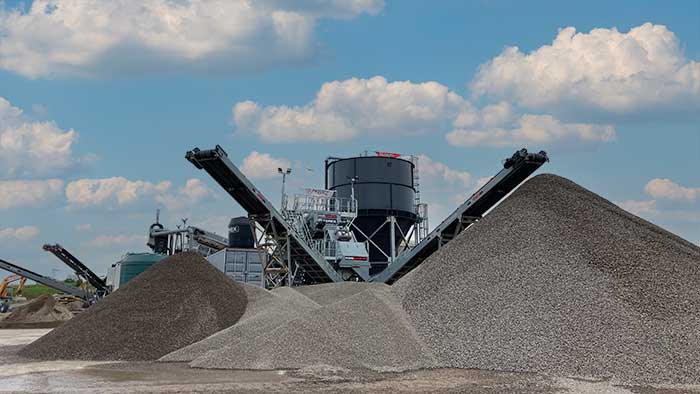
What Else Does a Complete Wash Plant Need?
AggreSand integrates the principal aggregate washing and sand classification equipment, but the complete installation depends on the site and the material being processed.
Material containing significant clay-bound contamination may require more intensive scrubbing than a conventional rinsing circuit provides.
A complete plant proposal should identify the supplied modules, selected options and supporting systems separately.
Additional equipment or infrastructure may include:
- Feed hoppers and conveyors
- Scalping or additional scrubbing equipment
- Water clarification and recycling systems
- Sludge handling and filter presses
- Transfer and stockpiling conveyors
- Electrical supply, foundations and site works
Is AggreSand Right for Your Operation?
AggreSand may be worth considering when your operation needs an integrated washing and sand recovery system, particularly where a modular installation offers advantages over a collection of separately arranged equipment.
Before recommending a plant, several questions need answers.
What are you feeding it? Natural sand and gravel, crushed aggregate and other suitable feed materials can present different washing and classification requirements.
What products do you need? Aggregate sizes, sand grading, allowable fines and end-use specifications determine the circuit.
How much material must you process? The production target must be evaluated alongside feed gradation, moisture, clay content and the required finished products.
How much washing does the material need? Material containing clay-bound particles or difficult contaminants may require additional scrubbing or separation equipment.
What about water? Available supply, permitted discharge, reuse objectives and sludge disposal all affect plant design.
What are your site constraints? Footprint, access, utilities, stockpiling and future expansion must be considered.
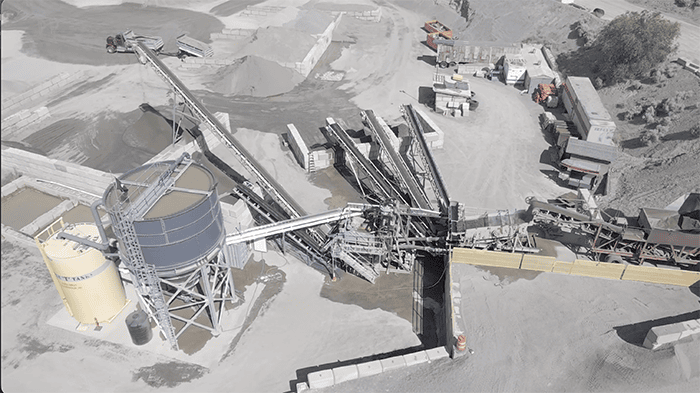
Building On An Existing Wash Plant?
Not every operation needs an entirely new washing system.
Where the existing plant already produces acceptable coarse aggregate, improvements to sand classification, dewatering or water management may address the production problem without replacing the entire circuit.
Foreman’s BA Dawson project demonstrates how an existing washing operation can be expanded with additional sand recovery and water management equipment.
Frequently asked Questions About Wash Plants
What's the difference between the AggreSand 165 and 206?
The AggreSand 165 uses a 16 × 5 ft washing screen, while the AggreSand 206 uses a 20 × 6 ft screen. Both offer different screening and sand recovery arrangements. Selection depends on feed characteristics, required products and overall plant capacity.
Can AggreSand produce more than one sand product?
Yes. Depending on the selected configuration, AggreSand can produce two washed sand grades.
Does AggreSand include a water recycling system?
AggreSand incorporates water handling within its washing and sand classification circuits. A complete process water recycling and sludge management system is a separate project requirement that must be evaluated and configured for the installation.
Can AggreSand remove clay from sand and gravel?
The washing circuit removes loose fines and rinses aggregate. Where material contains significant clay-bound contamination, additional scrubbing equipment may be necessary.
Is AggreSand a mobile wash plant?
AggreSand is modular and transportable, but it is not a self-propelled tracked washing plant. Relocation and installation require appropriate site preparation, handling equipment and connections.
What information does Foreman need to recommend a plant?
AggreSand is modular and transportable, but it is not a self-propelled tracked washing plant. Relocation and installation require appropriate site preparation, handling equipment and connections.
Discuss Your Sand & Gravel Washing Requirements
Whether you’re developing a new sand and gravel operation or evaluating improvements to an existing plant, Foreman Equipment can help you identify the equipment needed to produce your required finished products.
Serving aggregate producers throughout British Columbia and Alberta, Foreman supplies Terex Washing Systems equipment and supports customers with equipment selection, installation and ongoing service.
Discuss Your Sand & Gravel Wash Plant
Tell us what you’re processing, what you want to produce and what challenges you’re trying to solve.