
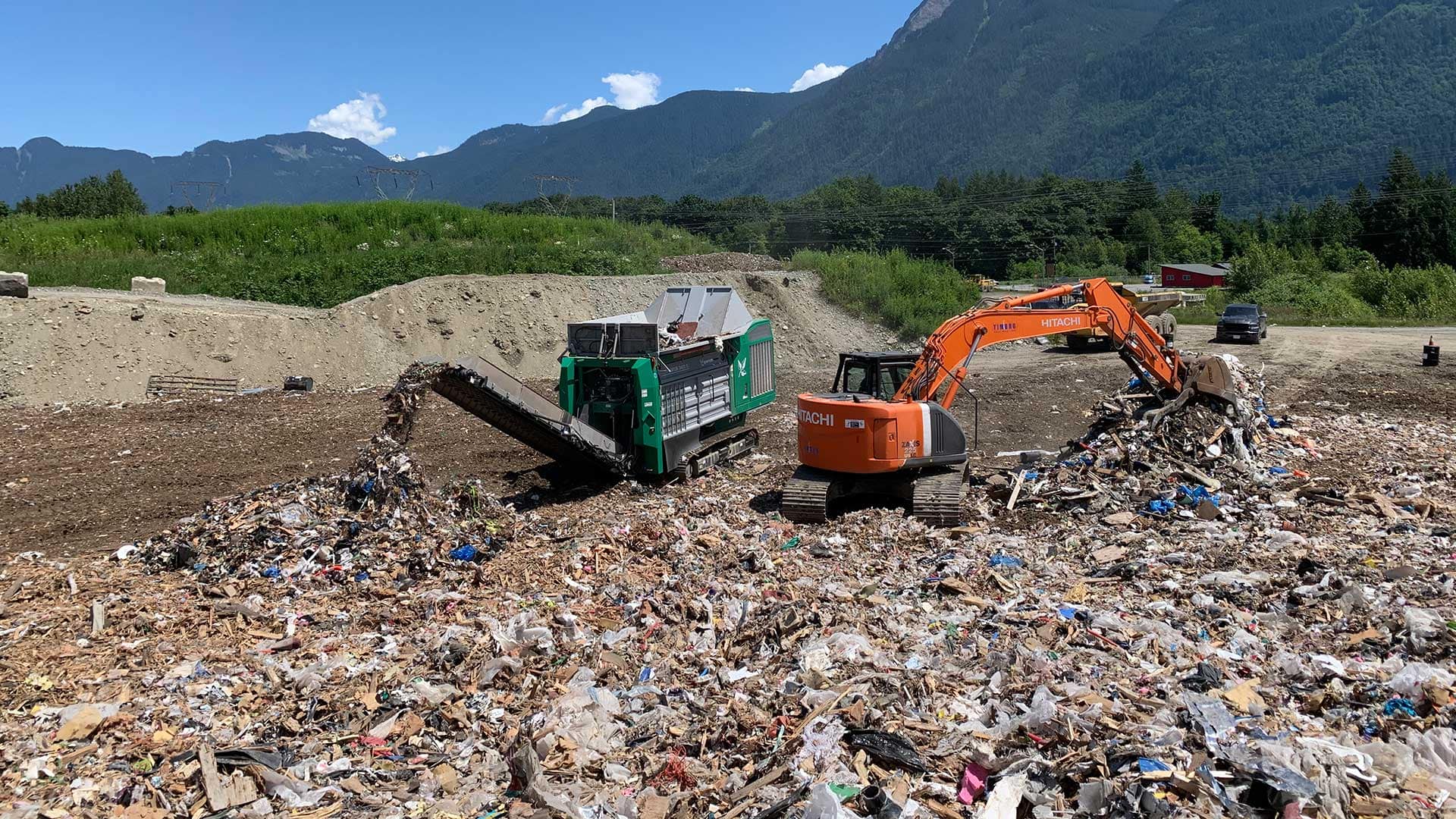
A slow-speed, high-torque shredder is an industrial size-reduction machine designed to process bulky, difficult or contaminated materials using high torque at relatively low rotor speeds. Rather than relying primarily on high-speed impact, the cutting system grips, tears and breaks material into smaller, more manageable pieces.
Slow-speed shredders are commonly used for wood and green waste, construction and demolition waste, municipal and commercial waste, bulky waste and other difficult material streams. They can operate as standalone size-reduction machines or as the first stage of a larger recycling system, preparing material for screening, separation and recovery.
How Does a Slow-Speed, High-Torque Shredder Work?
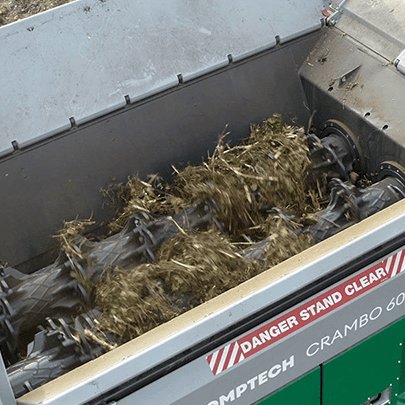
A slow-speed shredder uses one or more rotors equipped with cutting or tearing tools to grip material and pull it into the shredding chamber. Instead of relying on high rotor speed to break material apart, the machine applies high torque to tear, shear and reduce bulky material.
The combination of low rotor speed and high torque is what makes these machines particularly useful for difficult and inconsistent waste streams. Large pieces of wood, bulky waste and mixed material can be reduced to a more manageable size for handling or further processing.
The finished material does not necessarily leave the shredder as the final product. In many recycling applications, shredding is the first step in the process, preparing material for downstream screening, separation and recovery. That last point is already one of the strongest ideas in the existing article.
FEED MATERIAL → GRIP & TEAR → SIZE REDUCTION → DOWNSTREAM PROCESSING
Why Difficult Waste Streams Are Difficult to Process
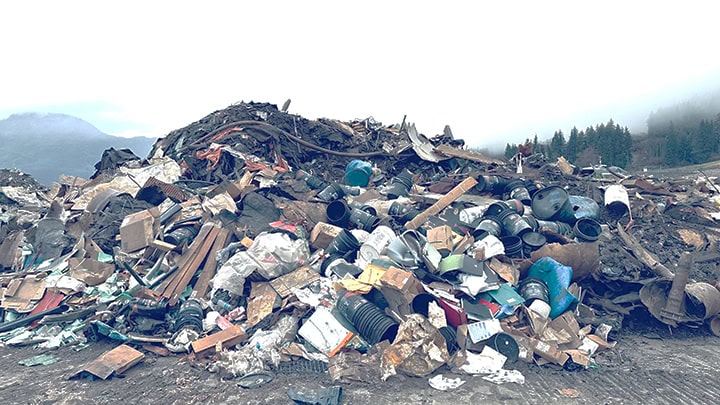
Waste rarely arrives in neat, consistent pieces. Bulky items, long or stringy material, mixed feed sizes and contaminants can make material difficult to handle, transport and process efficiently. Large pieces can bridge or jam equipment, inconsistent material can interfere with downstream screening and separation, and valuable recoverable material can remain trapped in an unmanageable waste stream.
Simply reducing the size isn’t always enough. The objective is to create a more consistent and manageable feed material for whatever happens next, whether that’s screening, separating recoverable material, producing a usable end product or reducing the volume that must be transported or disposed of.
This is where slow-speed, high-torque shredding can become part of the process. By gripping and tearing bulky material into smaller pieces, shredding can make difficult waste streams easier to handle and prepare them for downstream processing.
The Cost of Poorly Managed Waste
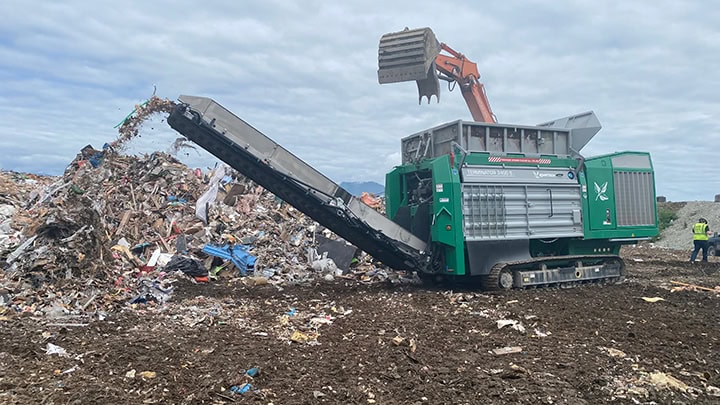
Difficult material doesn’t just create a processing problem. It creates a handling problem. Bulky, tangled and inconsistent waste takes up space, can be difficult to load and transport, and may require additional handling before valuable material can be recovered.
Sending bulky material directly to disposal can also mean paying to transport volume rather than value. And when recoverable wood, metals, organics or other materials remain mixed together, separating them downstream can become more difficult.
Reducing material to a more manageable and consistent size can change what happens next. Loads can become easier to handle, downstream screening and separation can become more practical, and recoverable materials can be exposed for further processing rather than remaining buried in the waste stream.
Where Slow-Speed Shredding Fits in the Recycling Process
A slow-speed shredder can be used as a standalone size-reduction step, but its real value often comes from preparing difficult material for whatever happens next.
By reducing bulky and inconsistent material into smaller, more manageable pieces, shredding can make it easier to screen material by size, separate recoverable materials or prepare a waste stream for additional processing. Instead of trying to accomplish every task in one machine, the shredder becomes the first step in a larger process.
The right process depends on the material and the desired outcome. Wood and green waste may be processed for reuse or further refinement, while mixed construction, demolition or municipal waste may require additional screening and separation to recover usable materials.
Benefits of Slow-Speed, High-Torque Shredding

Handle Bulky, Difficult Material
Slow-speed, high-torque shredding is designed to grip and reduce material that can be difficult to handle in its original form. Breaking bulky material down can make it easier to move, process and manage through subsequent stages.

Create a More Manageable Feed
Reducing large and inconsistent pieces can create a more manageable material stream for downstream equipment. This can be particularly important when screening, separating or recovering materials later in the process.

Prepare Material for Recovery
Shredding can expose materials that were previously tangled, embedded or difficult to separate. The shredder doesn’t perform the entire recovery process, but it can prepare the material for screening, sorting and separation equipment downstream.

Reduce Material Volume
Breaking bulky waste into smaller pieces can reduce the space it occupies and make material easier to stockpile, load or transport.
The actual reduction depends on the material and how it is processed.
What Materials Can Slow-Speed Shredders Process?
Slow-speed shredders are used across a wide range of waste and recycling applications, but the material a machine can effectively process depends on its design, tooling and configuration.
Common applications can include wood and green waste, construction and demolition waste, municipal and commercial waste, bulky waste, and other difficult or mixed material streams.
The condition of the feed matters just as much as the material itself. Particle size, density, moisture, contamination and the presence of difficult objects can all affect how a waste stream should be processed.
That’s why selecting a shredding process should start with the material coming in and the result required at the other end, rather than simply choosing a machine based on capacity.
Wood & Green Waste
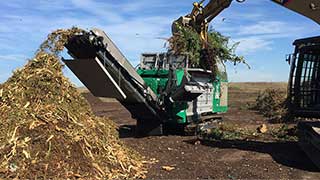 Branches, stumps, root material, forestry residue and other bulky organic material may require initial size reduction before further processing, screening or reuse.
Construction & Demolition Waste
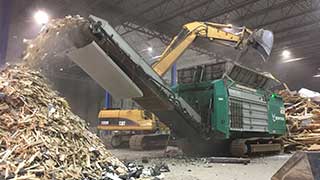
Mixed C&D streams can contain bulky and inconsistent materials that benefit from size reduction before subsequent screening and separation.
Municipal & Commercial Waste
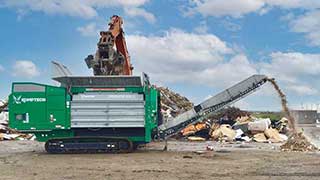 Bulky and mixed waste streams can be reduced to create a more manageable feed for downstream processing.
Bulky Waste
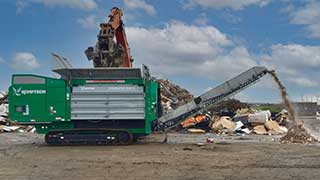
Large or awkward materials can be difficult to handle, transport and introduce into subsequent processing stages. Shredding provides an initial size-reduction step.
Choosing the Right Shredding Process
The right shredding process starts with the material, not the machine. Before deciding how a waste stream should be processed, operators need to understand what is going in, what needs to come out and what happens to the material next.
Feed size, material composition, moisture, contamination and variability can all influence the shredding process. Just as important is the desired result. Material being prepared for screening or separation may have very different requirements from material being reduced simply for easier handling or transportation.
Production targets and downstream equipment also matter. A shredder should be considered as part of the overall material flow rather than as an isolated piece of equipment.
Start with the problem: What material are you processing? What makes it difficult? What do you want to produce or recover? Answer those questions first, and the right processing approach becomes much easier to define.
Explore Slow-Speed Shredding Solutions
If bulky, inconsistent or difficult material is creating problems in your operation, the next step is understanding the equipment designed to process it.
Explore Foreman’s slow-speed shredding solutions and see how different configurations can be matched to the material, required output and downstream process.