
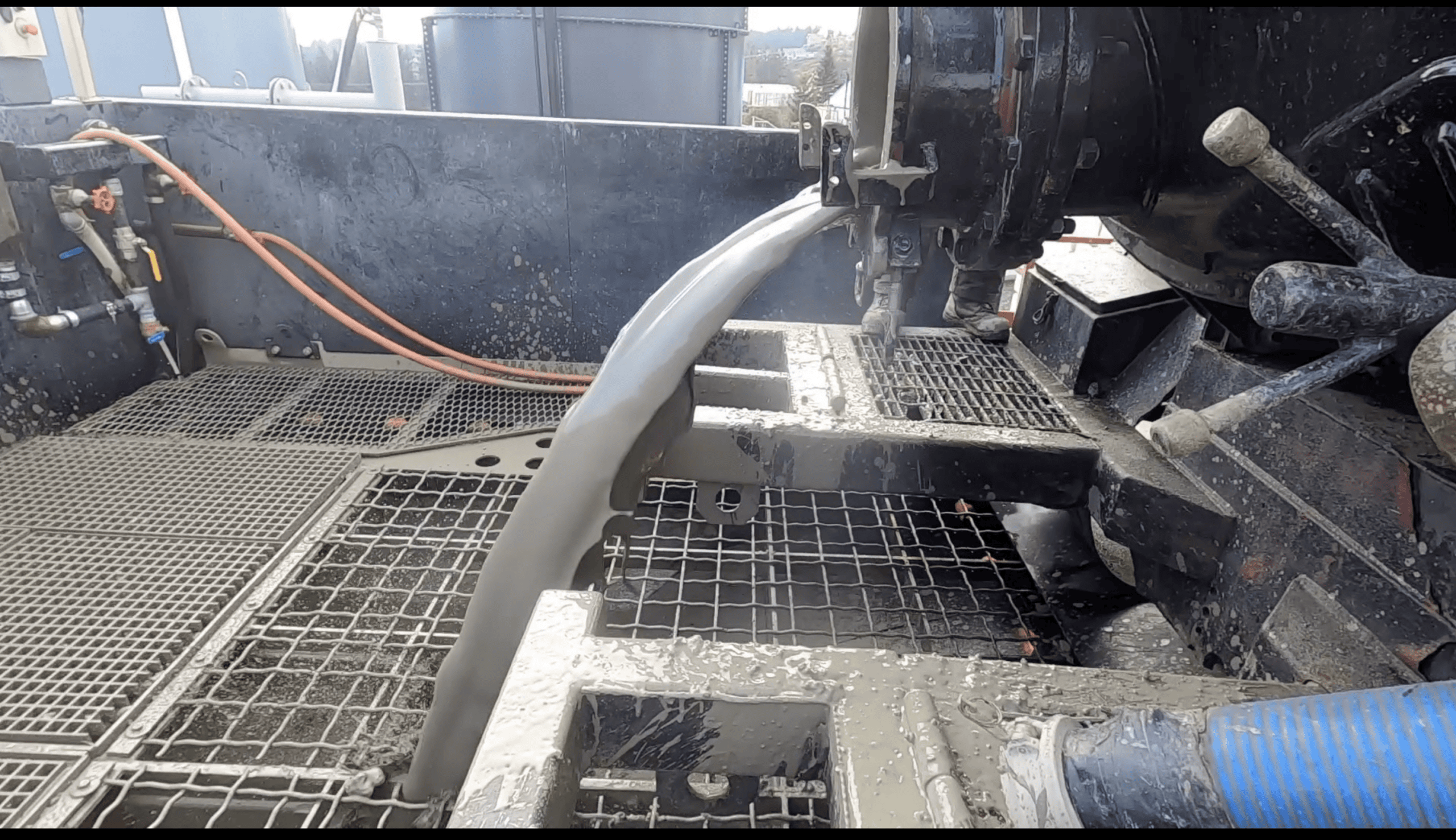
The Expensive Reality of the Hydrovac Dump Truck
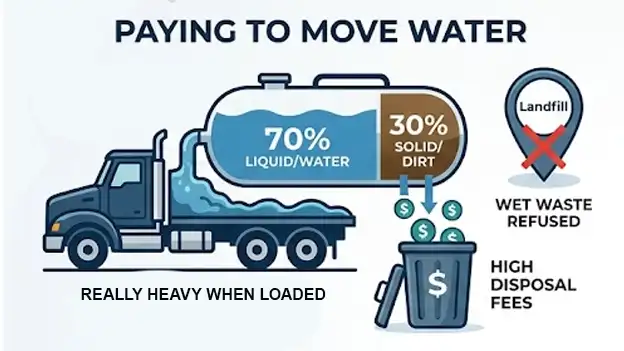
Every time one of your hydrovac trucks leaves a job site fully loaded, it’s headed toward a financial bottleneck.
Most fleet operators view the tank as just containing “dirt and debris.” But it isn’t. It’s an incredibly heavy, unstable, liquid-dominant slurry. Because of the nature of hydro excavation, water frequently makes up anywhere from 50% to 70% of the total load volume.
The core problem? You aren’t just moving soil, you are paying premium rates to haul dead weight.
Quick Takeaways for Fleet Managers
Hydrovac slurry is mostly water, making it incredibly heavy and expensive to haul in its raw form.
Landfills are aggressively raising tipping fees or outright banning wet waste, forcing longer transit times and destroying operational efficiency.
A modular
hydrovac waste recovery and recycling system
Want to see how it works?
Ignoring Your Slurry Waste is Essentialy Burning Cash
If you keep treating hydrovac slurry like standard dry waste, the overall costs will continue to compound across your entire operation. Let’s rub some salt in the wound and look at what’s actually happening behind the scenes:
1. You Are Writing Checks to Transport Water
Think about your fuel, labor, and truck maintenance. A massive percentage of those line items is spent transporting thousands of gallons of water away from the job site and down the highway. You are essentially paying a driver to sit in traffic with a tank full of water that you bought, used, and are now trying to throw away.
2. Landfills are Penalizing Wet Waste
Traditional dump sites don’t want liquid waste. It ruins cell stability and complicates environmental compliance. Because of this, facilities are fighting back with:
Charging massive premiums just to take liquid-heavy streams off your hands.
Forcing your drivers to turn around and hunt for specialized facilities, racking up lost hours and burning fuel.
Requiring you to pay for expensive chemicals or wood chips to dry out the load before it can even be dumped.
3. You are Paying to Buy Material You Already Owned
Inside that slurry is an abundance of high-quality sand, gravel, and natural aggregates. When you dump raw slurry, you pay to get rid of those materials. Then, on your next backfill job, you turn around and buy those exact same aggregates right back from a supplier.
Traditional Waste vs. Optimized Recovery
| Cost & Asset Metrics | Traditional Slurry Hauling | On-Site Waste Processing |
| Hauling Expenses | High (Paying for heavy liquid weight) | Minimal (Only moving dry, dewatered byproduct) |
| Tipping Fees | Premium Rates for wet/liquid waste streams | Standard Rates for minimal dry solids |
| Water Sourcing | Continuous costs for fresh operational water | Recycled (Up to 80–90% of water is reclaimed) |
| Material Asset Yield | 0% (All reusable sand and rock is dumped) | High Profit (Clean sand/aggregate recovered) |
Stop Hauling Material. Start Processing It.
The cycle of hauling, dumping, and re-buying is entirely avoidable. The solution is to shift your mindset: Stop treating hydrovac slurry as a waste stream to throw away, and start treating it as an aggregate source to process.
By implementing a dedicated
Turn Your Biggest Expense into a Profit Center
Continuing to haul raw hydrovac slurry is a quiet margin killer. By adopting a closed-loop recycling setup, you drastically lower your logistical footprint, eliminate premium landfill penalties, and generate clean, reusable materials right from your yard.
Don’t let your profits get washed away. Explore how a engineered
Frequently Asked Questions About Hydro Vac Waste Disposal
Why is hydrovac slurry disposal so expensive?
Landfills categorize raw slurry as a liquid waste stream. Because liquid compromises landfill stability, facilities charge premium tipping fees to cover the cost of tracking, specialized containment cells, or chemical bulking agents needed to solidify the material.
What is hydrovac waste actually made of?
Hydrovac waste is a wet slurry comprised of 50% to 70% water combined with varying levels of sand, clay fines, natural soil, and gravel excavated during non-destructive digging.
Can you reuse the water recovered from hydrovac slurry?
Yes. Advanced hydrovac recycling systems use clarification thickeners to isolate ultra-fine particles, leaving behind clean, clarified water that can be fed directly back into hydrovac trucks for excavation work.
What materials can be salvaged from a hydrovac load?
A proper multi-stage washing plant will cleanly separate a hydrovac load into reusable, marketable coarse sand, natural drainage aggregates, and recycled process water.