
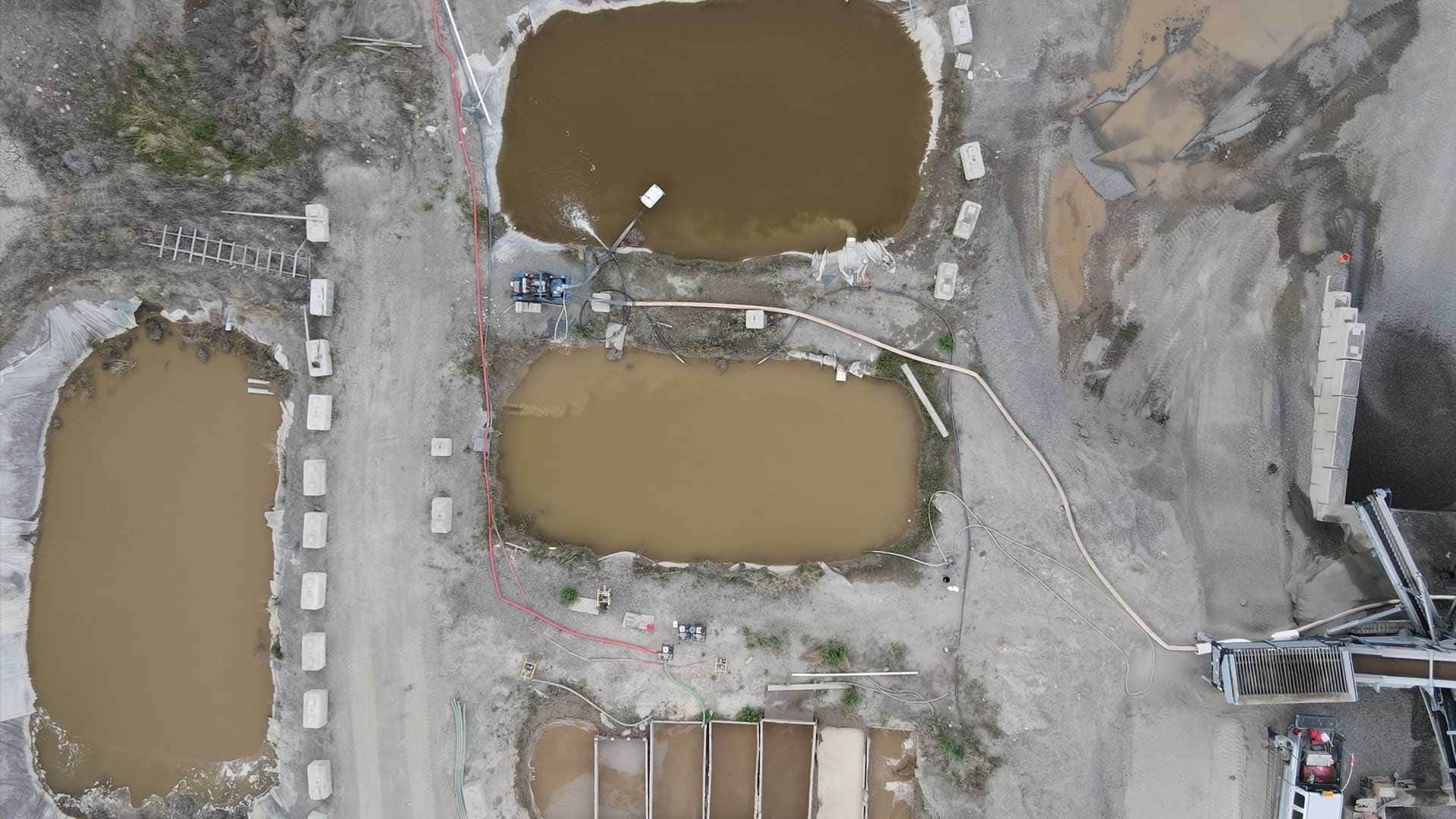
Water management in aggregate washing is the process of separating solids from wash water so the water can be clarified, recovered and reused in the plant. As material is washed and classified, water carries clay, silt and fine particles away from the finished product, creating a slurry that must be managed. Depending on the system, that water can be clarified and returned to the wash circuit while the recovered solids are concentrated and dewatered for handling or disposal.
A well-designed water-management system can reduce fresh makeup-water requirements, improve fines and sludge handling, and reduce reliance on large settling ponds. Some systems can recover up to 95% of process water, depending on the application and plant configuration.
How Is Water Used in an Aggregate Wash Plant?
Water performs several jobs in an aggregate wash plant. It rinses coarse material on screen decks, helps separate and classify sand, and carries clay, silt and fine particles away from the finished product. As those solids become suspended in the water, they create a slurry that must either be treated for water recovery or managed through a settling system.
The amount of water required depends on the feed material, the products being made and the washing and classification equipment being used. Material containing higher levels of clay, silt or unwanted fines may require more intensive washing and water management than relatively clean feed material.
The important distinction is between water used by the process and fresh water consumed by the plant. In a recycling system, much of the process water can be recovered, clarified and returned to the wash circuit. Fresh makeup water replaces water lost with finished products, sludge or filter cake, and through other operational losses.
How Water Moves Through an Aggregate Wash Plant
Feed and Initial Rinse
Water is sprayed at the start to knock off dust and fines. It flows down through vibrating screens and washing decks.
Slurry Separation
The water now contains fine sand, silt, clay, and ultra-fines. This slurry moves to classification equipment.
Basic Wash Plant Process Flow
THE PROCESS
A Smarter Way to Use Water
From feed to finished product, with a closed-loop water circuit that recovers and reuses as much water as possible.
Washing sand and gravel takes place in two stages:
- Coarse Washing Circuit, consisting of rock larger than 5mm.
- Wet Washing Circuit — A wet slurry consisting of fine materials like clay, silt and other contaminants.
Coarse Washing Circuit
Feed Material
Raw material is fed into the wash plant.
Wash / Rinse
Water removes clay, silt and other contaminants.
Rock larger than 5mm
Washed rock larger than 5mm remains on the screen and is sorted by size.
Aggregate / Fines 5mm and Smaller
Pass through this screen deck enters the wet wash circuit as a slurry, where it is sent downstream for classification and recovery.
Clean Sized Aggregate and Sand is Stockpiled
Raw material is fed into the wash plant.
Fine Material Wet Washing Circuit
Slurry
Water with suspended fines flows to the water management system for classification and fines recovery.
Water Management & Recovery Technologies

Cyclones
Separate sand from silt and redirect usable material.
Thickeners
Settle out ultra-fines and clarify the water.
Filter Presses
Press sludge into dry cakes for easy disposal.
Settling Ponds
Use gravity and time to naturally clear the water.
Why Smarter Water Recovery Matters
Recovering process water reduces the amount of fresh makeup water a wash plant requires and gives operators greater control over fines and sludge management. Depending on the application and plant configuration, some systems can recover up to 95% of process water for reuse.
Water recovery can also reduce reliance on large settling ponds, decrease the volume of wet sludge that must be managed, and make more water available to return to the wash circuit. The actual recovery rate depends on the feed material, equipment, product specifications and overall plant design.
Choosing The Right Tools For The Job
There is no single water-management system that fits every wash plant. The right combination depends on the feed material, products being made, volume and type of fines, available water, site footprint and how the recovered solids will be handled.
Cyclones can classify material and recover usable fines from the slurry. Thickeners concentrate suspended solids and recover clarified water for reuse. Filter presses can further dewater concentrated sludge and recover additional water, while settling ponds may provide a simpler option where sufficient land and settling time are available.
In many operations, these technologies work together rather than as alternatives. The goal is to design the water circuit around the material being processed, the finished products required and the amount of water the operation wants or needs to recover.
Make a Plan (We Can Help)
Every site is different. Our team can help you map your flow, choose the right equipment, and get it all running smoothly.
Planning or Upgrading an Aggregate Wash Plant?
Tell us what you’re washing, the products you’re trying to make, your production target and how you’re currently managing water and fines. Foreman can help you work through the process and configure a washing and water-management system around your operation.
Frequently Asked Questions About Washing
How much water can an aggregate wash plant recycle?
Depending on the application and plant configuration, some water-management systems can recover up to 95% of process water for reuse. The actual recovery rate depends on factors such as the feed material, amount of fines, equipment configuration and finished-product requirements.
Recovered water can be returned to the wash circuit, while fresh makeup water replaces water lost with finished products, sludge or filter cake and through other operational losses.
What happens to water after aggregate is washed?
As aggregate is washed, the water carries clay, silt, fine sand and other suspended solids away from the finished material. This mixture of water and solids forms a slurry.
The slurry can then pass through classification, clarification and dewatering processes. Solids are separated or concentrated while clarified water can be recovered and returned to the wash plant.
What is the difference between a thickener and a filter press?
A thickener concentrates suspended solids from process water and produces clarified overflow water that can be returned to the wash circuit. The concentrated slurry leaves the bottom of the thickener for further handling.
A filter press takes concentrated slurry and mechanically removes additional water, producing a more manageable filter cake while recovering more water for reuse. The two technologies can therefore work together within the same water-management system.
Does an aggregate wash plant need settling ponds?
Not necessarily. Settling ponds use gravity and retention time to allow suspended solids to settle and water to clarify. They can still be a practical solution where sufficient land and settling capacity are available.
Other operations may use thickeners, filter presses or a combination of technologies to reduce their reliance on large settling ponds. The appropriate approach depends on the site, material, production requirements and water-management goals.
What is a closed-loop water system in aggregate washing?
A closed-loop water system recovers process water and returns it to the wash plant for reuse rather than continually relying on new water for the entire process. Solids are separated from the wash water, clarified water is recirculated, and fresh makeup water replaces operational losses.
“Closed loop” does not necessarily mean that no fresh water is required. Water can still leave the system with finished material, sludge or filter cake and through other losses.