
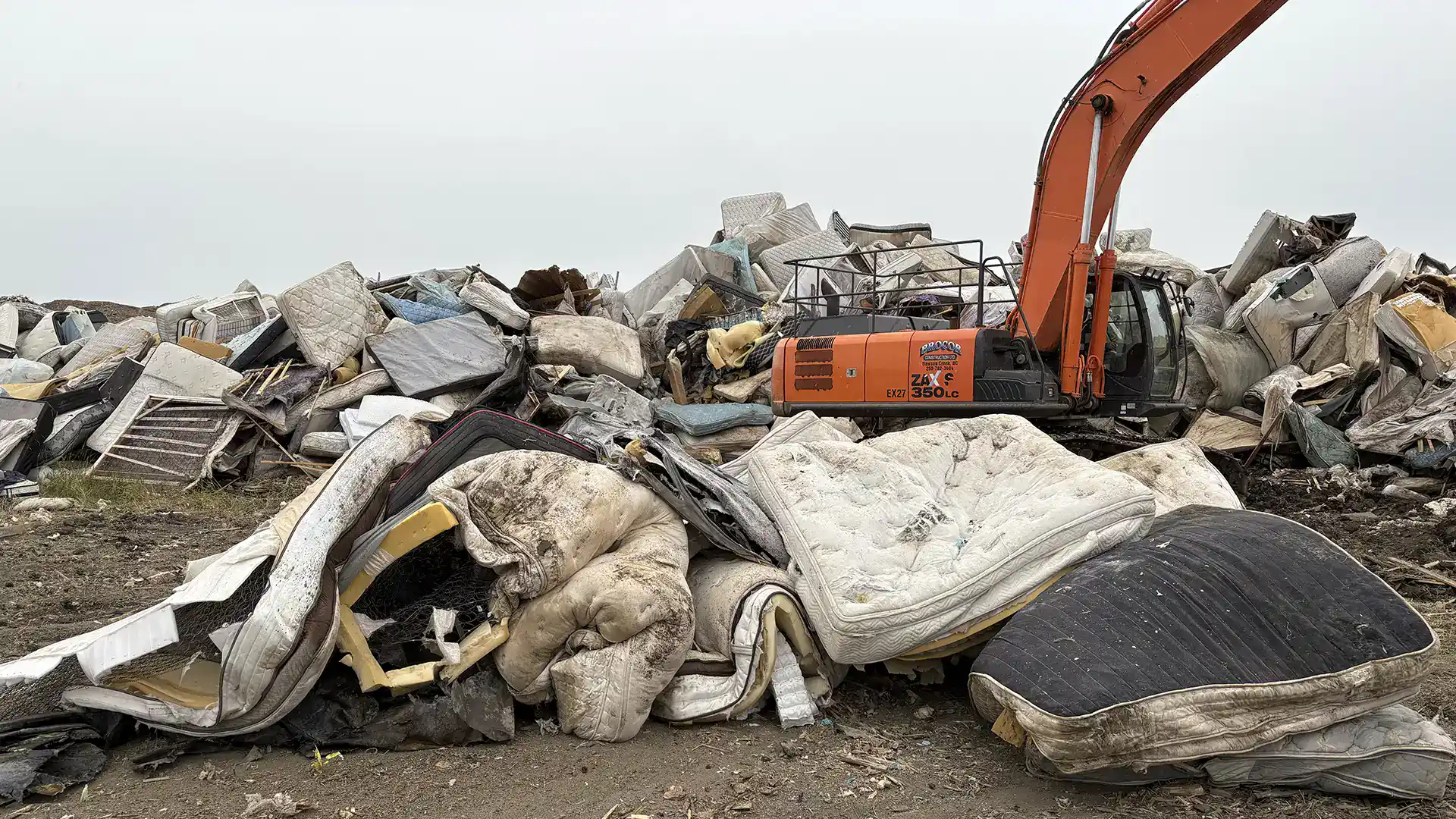
The Hidden Cost of Mattresses: Why Disposal is a Growing Municipal Challenge
Most of us don’t think twice about what happens after a mattress reaches the end of its life. But for municipalities, landfills, and recycling depots, mattresses have quietly become one of the most frustrating and expensive waste streams to manage.
This guide breaks down why mattress recycling is such a challenge and what the industry is doing to solve it.
Mattresses Create Massive Operational Headache
Across North America, millions of mattresses are discarded every year. Municipal transfer stations often receive thousands per month, especially in larger cities.
Unlike wood, metal, or concrete, mattresses aren’t one single material — they’re layered with:

Steel springs
High-density foam
Cotton or fibre fill
Synthetic fabrics
Wooden frames
And a surprising amount of trapped air
That combination makes them both bulky and difficult to process.
Four Reasons Mattresses Are So Hard to Dispose Of.
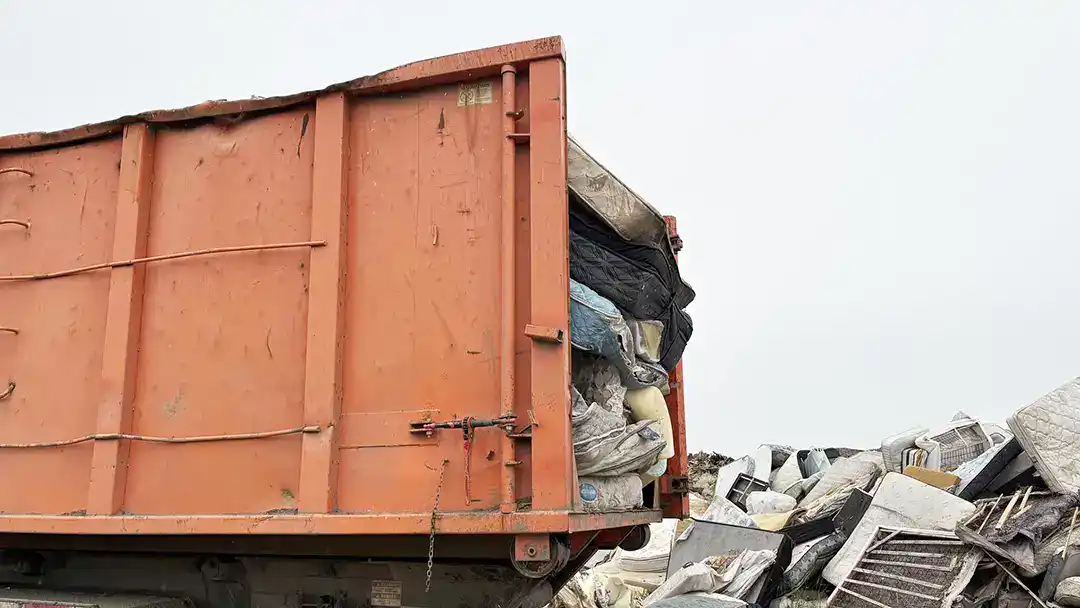
 They Eat Up Bin Space
Because of their shape and built-in air pockets, mattresses fill containers fast. Trucks end up hauling volume, not weight, which leads to higher fuel costs and frequent trips.
 They Aren’t Easy to Compact
Traditional compactors struggle with them. Wire coils resist flattening, and the outer fabric prevents uniform crushing, making space reduction unpredictable.
 Tangling Risks Slow Everything Down
Steel springs and internal wire can snag on machinery, causing delays, safety concerns, and maintenance problems.
 They Create More Work for Operators
Workers frequently have to hop on and off equipment to reposition or free stuck material, slowing throughput and creating manual handling risks.
Despite efforts to recycle, many sites find themselves saying the same thing.
“There has to be a better way.”
See How Municipalities Can Actually Fix the Mattress Problem
Mattress disposal doesn’t have to overwhelm your transfer station or landfill. There is a machine built specifically to handle them efficiently — and safely.
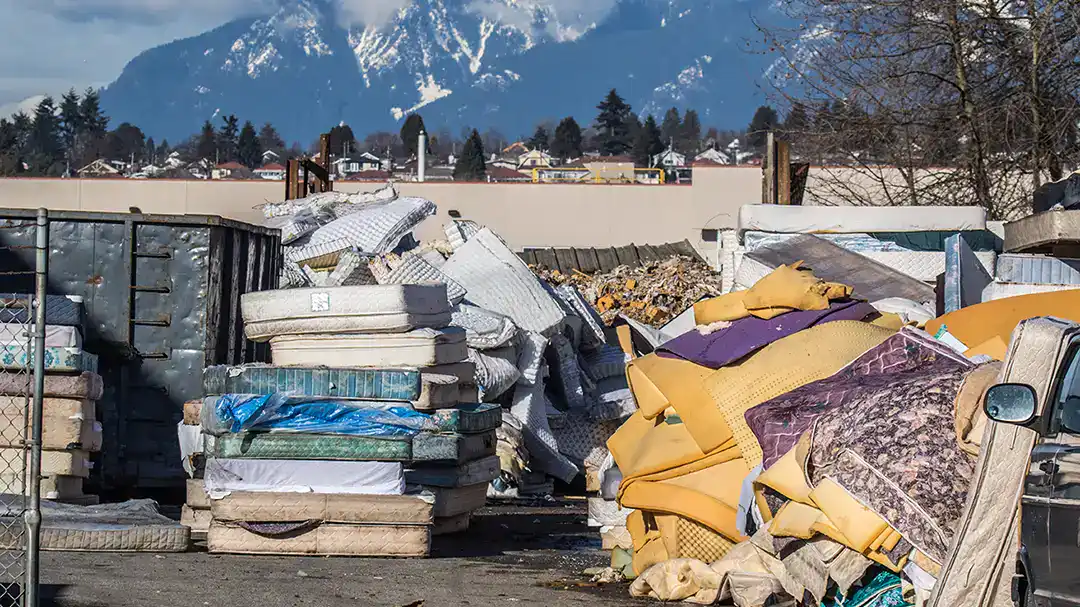
Environmental Impacts That Are Hard to Ignore
When mattresses do end up in landfills, they contribute more than just space waste:
Foam breaks down slowly
Fabrics add to micro-waste
Steel coils complicate decomposition
And layered materials reduce the chances they’ll be sorted efficiently for reuse
Even well-meaning recycling programs often can’t dismantle them fast enough to keep up.
The Real Problem Isn’t Lack of Solutions… It’s Lack of Awareness
The bigger issue is that many people, organizations, and even local governments simply don’t know:
How costly mattresses are to transport
Why they resist traditional compaction
How much space they waste in disposal bins
How they complicate recycling workflows
Why operator safety becomes a concern
This is why mattress recycling still feels like an uphill battle.
Mattress Disposal Doesn’t Have to Be This Hard
Municipalities and recycling contractors are already using a better way to process mattresses with fewer truckloads, less downtime, and safer workflows.


